
Learn everything about Loans in India, including loan types, required documents, banks and NBFCs, government loan schemes, loan frauds, market size, and the impact of loans on Indian youth.
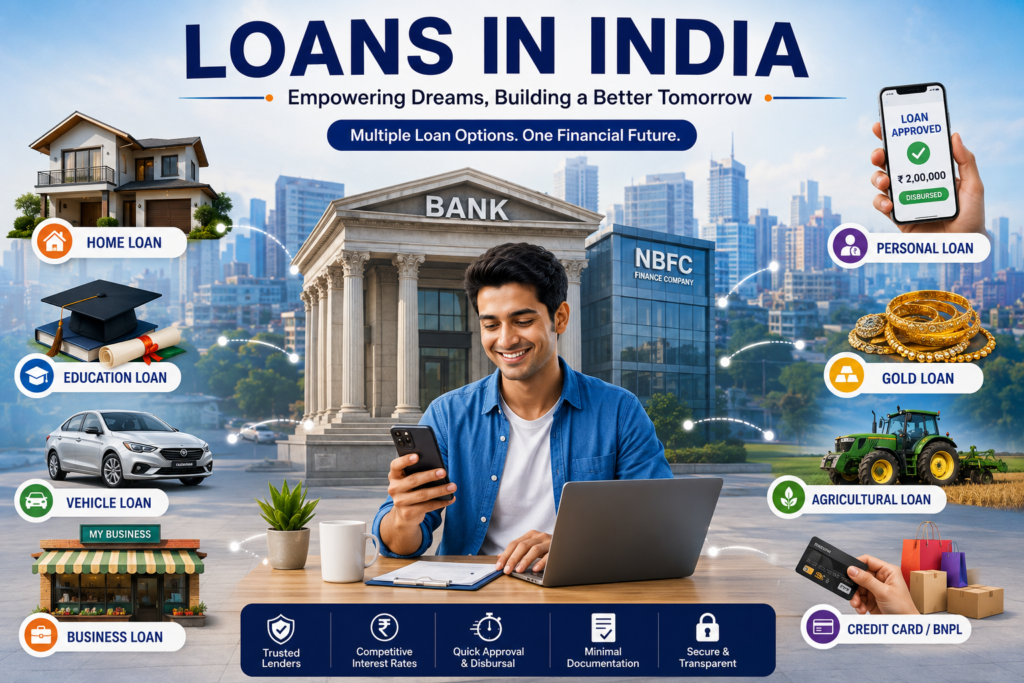
Loans in India: Complete Guide to Types, Banks, NBFCs, Government Schemes & Loan Risks
India’s financial ecosystem has transformed dramatically over the last two decades. From traditional bank lending to instant digital loans through mobile apps, loans in India have become more accessible than ever before. Whether it is a home loan, education loan, business loan, or personal loan, credit has become a major driver of economic growth and individual aspirations.
Today, loans help millions of Indians buy homes, fund higher education, start businesses, purchase vehicles, and manage emergencies. However, easy access to credit has also increased debt burdens, financial fraud, and irresponsible borrowing among young consumers.
This guide explains the different types of loans in India, required documentation, the role of banks and NBFCs, government-backed schemes, common loan frauds, and the social impact of borrowing on Indian youth.
Understanding the Loan in India
The Indian lending market is one of the fastest-growing financial sectors globally. The rise of digital banking, fintech platforms, UPI infrastructure, and Aadhaar-based verification has accelerated credit distribution across urban and rural India.
The loan ecosystem in India includes:
- Public sector banks
- Private sector banks
- Cooperative banks
- Non-Banking Financial Companies (NBFCs)
- Microfinance institutions
- Fintech lenders
- Government-backed financial institutions
Retail lending has become especially popular among salaried professionals, students, entrepreneurs, and first-time borrowers.
Types of Loans in India
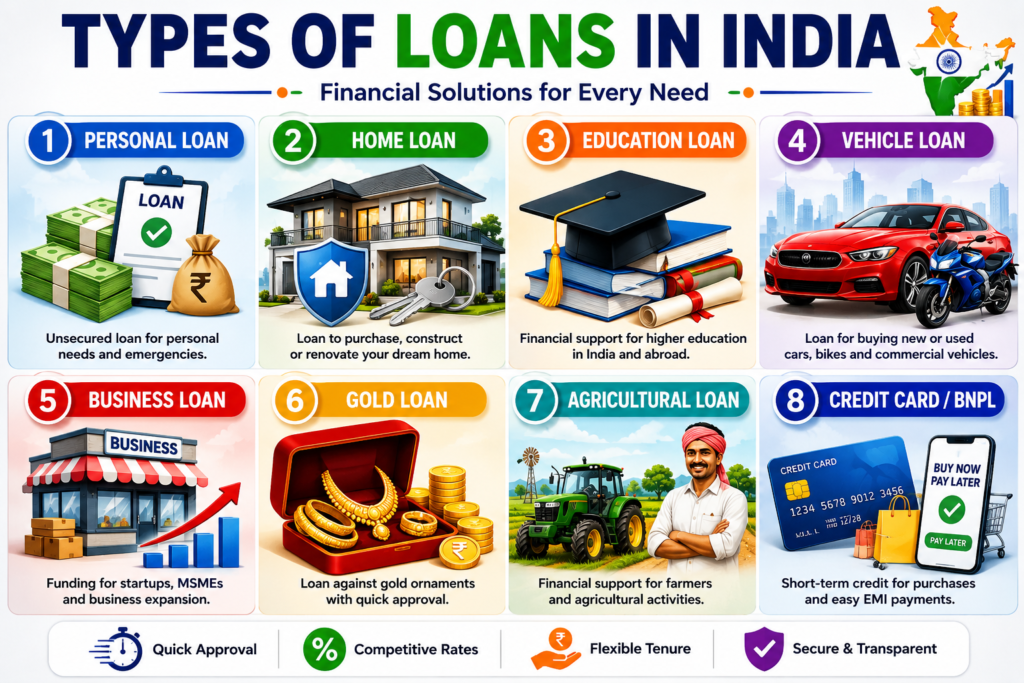
1. Personal Loans
Personal loans are unsecured loans offered without collateral. They are commonly used for:
- Medical emergencies
- Weddings
- Travel
- Home renovation
- Debt consolidation
These loans generally have higher interest rates because lenders take greater risk.
2. Home Loans
Home loans help individuals purchase residential property. Banks usually offer repayment tenures ranging from 10 to 30 years.
- Benefits include:
- Flexible EMI options
- Tax deductions under the Income Tax Act
- Lower interest rates compared to personal loans
3. Education Loans
Education loans support students pursuing higher education in India or abroad.
They cover:
- Tuition fees
- Hostel expenses
- Examination fees
- Study materials
Many education loans offer moratorium periods where repayment starts after course completion.
4. Vehicle Loans
Vehicle loans finance the purchase of:
- Cars
- Bikes
- Commercial vehicles
- Electric vehicles
The vehicle itself acts as collateral until repayment is complete.
5. Business Loans
Business loans help startups, MSMEs, and entrepreneurs manage operations and expansion.
They are commonly used for:
- Working capital
- Machinery purchase
- Inventory
- Office expansion
- Staff salaries
6. Gold Loans
Gold loans are secured against gold ornaments or coins. These loans are popular in India due to quick processing and minimal documentation.
Gold loans are widely used in rural and semi-urban regions.
7. Agricultural Loans
Farmers receive agricultural loans for:
- Crop cultivation
- Irrigation systems
- Tractor purchases
- Seeds and fertilisers
These loans are often subsidised by government schemes.
8. Credit Card Loans & Buy Now Pay Later (BNPL)
Digital lending has introduced instant micro-credit solutions. BNPL services allow consumers to purchase products immediately and repay later in installments.
While convenient, excessive usage may create debt traps among young consumers.
Documents Required for Loans in India
Different lenders may request additional paperwork, but common loan documents include:
Identity Proof
- Aadhaar Card
- PAN Card
- Passport
- Voter ID
Address Proof
- Utility bills
- Rental agreement
- Passport
- Aadhaar card
Income Proof
- Salary slips
- Income Tax Returns (ITR)
- Bank statements
- GST returns for businesses
Employment or Business Proof
- Employee ID
- Offer letter
- Business registration certificate
Property or Asset Documents
Required for secured loans such as:
- Home loans
- Vehicle loans
- Gold loans
Major Banks Offering Loans in India
Public Sector Banks
- State Bank of India (SBI)
- Punjab National Bank (PNB)
- Bank of Baroda
- Canara Bank
Private Sector Banks
- HDFC Bank
- ICICI Bank
- Axis Bank
- Kotak Mahindra Bank
These banks provide various retail and corporate lending products with competitive interest rates.
Role of NBFCs in India’s Loan Market
Non-Banking Financial Companies (NBFCs) have significantly expanded financial inclusion in India.
Popular NBFCs include:
- Bajaj Finance
- Muthoot Finance
- Mahindra Finance
- Shriram Finance
NBFCs often serve customers who may not qualify for traditional bank loans.
Advantages of NBFCs
- Faster approvals
- Flexible eligibility
- Digital-first lending
- Better rural penetration
Risks
- Higher interest rates
- Aggressive recovery practices in some cases
- Less stringent lending standards
Government-Backed Loans in India
The Indian government has launched several initiatives to improve financial inclusion and entrepreneurship.
Pradhan Mantri Mudra Yojana (PMMY)
MUDRA loans support small businesses and startups.
Categories include:
- Shishu
- Kishor
- Tarun
These loans are especially beneficial for small traders and micro-enterprises.
Stand-Up India Scheme
This scheme promotes entrepreneurship among:
- Women entrepreneurs
- SC/ST business owners
It provides loans for greenfield enterprises.
PM SVANidhi Scheme
Designed for street vendors, this scheme provides working capital loans with affordable repayment structures.
Education Loan Subsidy Schemes
Government subsidy programs help economically weaker students pursue higher education.
Kisan Credit Card (KCC)
KCC helps farmers access affordable agricultural credit for cultivation and farming expenses.
Digital Lending and Fintech Growth in India
India’s fintech revolution has changed how loans are approved and disbursed.
Features include:
- Instant approval
- Paperless KYC
- AI-based credit assessment
- Mobile-first applications
Popular fintech lending apps have expanded access to credit but have also raised concerns about consumer protection.
Common Loan Frauds in India
As digital lending grows, loan scams have become increasingly common.

Fake Loan Apps
Fraudulent apps promise instant loans, but:
- Steal personal data
- Charge hidden fees
- Harass borrowers
Phishing Scams
Fraudsters impersonate banks and ask users to share:
- OTPs
- Bank credentials
- Aadhaar details
Advance Fee Fraud
Victims are asked to pay processing charges before loan approval. The fraudster disappears after receiving payment.
Identity Theft
Stolen PAN and Aadhaar details are sometimes used to take unauthorised loans.
How to Avoid Loan Frauds
- Borrow only from RBI-registered institutions
- Never share OTPs
- Verify loan apps before downloading
- Read loan agreements carefully
- Avoid lenders demanding upfront payments
Positive Impact of Loans on Indian Youth
Loans can play a constructive role when used responsibly.
1. Higher Education Access
Education loans help students pursue quality education globally.
2. Entrepreneurship Growth
Startup funding encourages innovation and job creation.
3. Financial Independence
Loans help young professionals buy homes, vehicles, and assets early in life.
4. Credit Score Building
Responsible repayment improves credit history and future borrowing capacity.
Negative Impact of Loans on Youth
Easy digital credit has also created financial risks.
1. Rising Debt Culture
Young consumers may overspend due to easy EMI options.
2. Mental Stress
Debt repayment pressure can affect mental health and productivity.
3. Credit Score Damage
Missed EMIs negatively impact creditworthiness.
4. Loan App Exploitation
Unregulated apps may use harassment and privacy violations during collections.
5. Lifestyle Inflation
Borrowing for luxury spending rather than productive assets can create long-term financial instability.
Importance of Responsible Borrowing
Before taking any loan, borrowers should evaluate:
- Repayment capacity
- Interest rates
- Processing fees
- Hidden charges
- Loan tenure
- Credit score impact
Financial literacy is essential to ensure loans remain a tool for growth rather than a burden.
Conclusion
Loans in India have become an essential part of economic development and personal financial planning. From education and housing to entrepreneurship and agriculture, credit enables millions of Indians to achieve their goals.
At the same time, the rise of digital lending and easy access to credit require stronger financial awareness. Responsible borrowing, proper verification, and understanding loan terms are critical for avoiding debt traps and financial fraud.
As India’s lending ecosystem continues evolving through banks, NBFCs, fintech platforms, and government initiatives, consumers must balance opportunity with caution.
FAQs
The major loan types include personal loans, home loans, education loans, business loans, vehicle loans, agricultural loans, and gold loans.
Common documents include Aadhaar card, PAN card, salary slips, bank statements, address proof, and income tax returns.
Banks can accept deposits and are more heavily regulated, while NBFCs primarily provide loans and financial services with greater flexibility.
Only RBI-registered and verified lending apps should be used. Many fake apps operate illegally and misuse borrowers’ data.
Popular schemes include PM Mudra Yojana, Stand-Up India, PM SVANidhi, and Kisan Credit Card.
Yes, many banks offer unsecured education loans up to a certain limit, depending on the institution and course.
Excessive borrowing may lead to debt traps, financial stress, poor credit scores, and repayment difficulties